
How Do I Build a Distinct Brand Identity? A Guide for Your Private Practice
Updated: March 17, 2026 · 10 Minute Read

Written by:
Savanah Farnell
Highlights
- You can think of brand positioning as getting crystal clear on what makes your practice unique.
- Your specialty is what makes families think, "This person really gets it. They're who I need”.
- When you build your practice brand strategically, it becomes the foundation for everything else.
The Missing Piece in Private Practice
You did it! You started your very own private practice. You're your own boss, you're doing meaningful work, and you're ready to change lives. The first month is exciting. You're setting up systems, refining your approach, refreshing your materials. As you settle in, one question keeps coming up: how do you make sure the right clients can find you?
Here's the thing: starting a therapy practice takes more than being a great clinician. You also need a clear way to show families what makes you different and why you're the right fit for them. The good news? The therapists who fill their caseloads fastest aren't always the most experienced, they're the ones who explain what they do most clearly. This article will walk you through the key pieces of building your practice’s brand so you can attract the right clients and create the practice you've been dreaming of!
The Challenge Facing New Practice Owners
Here's what we hear all the time: You want your practice to stand out! You want families to see you and think, "Yes, this is exactly the therapist we need." But without a clear way to show what makes you different, practices start to blend together. Websites look similar, mission statements sound the same, and families have a really hard time figuring out who's the best fit for their specific situation.
So what does this mean for you as a new practice owner? It can feel like you're stuck competing on things outside of your control, like where your office is located or which insurance plans you can accept. Yes, those things matter to families, but what matters most is finding a therapist who truly understands their needs and can help them get results. That's where brand positioning comes in. You can think of brand positioning as getting crystal clear on what makes your practice unique. It's about showing families exactly what problem you solve, who you're best at helping, and why you're great at what you do. When you have a strong brand, the right families find you faster, and you can build the kind of practice you actually want to run!
The Three Pillars of Positioning
Building a distinctive brand comes down to three main pieces: 1.) who you serve (your target audience), 2.) what you're really good at (your specialty), and 3.) how you work with families (your service delivery model). These three things work together and they influence one another. They are called the ‘pillars’ of positioning.
Think of it this way: Your audience is WHO you help. Your specialty is WHAT makes you the expert they're looking for. Your service model is HOW you deliver care. When these three pieces align, you've got a clear message that tells families, "This practice is perfect for us”.

Broad vs. Niche: How to Decide
One of the first big decisions you'll face is your audience: should you serve everyone, or focus on a specific group. Both approaches can work, and each comes with its own pros and cons.
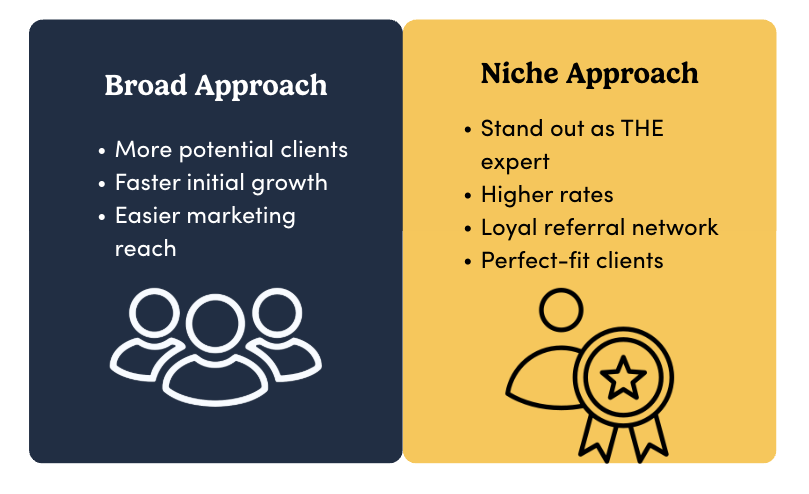
Serving everyone or going ‘broad’ means you can help people of all ages with all kinds of communication needs. The upside to this approach is that you have more potential clients to reach. Your marketing can speak to lots of different families, which can help you fill your schedule faster in the beginning. It's an effective approach, especially when you're starting out and building momentum. However, going broad comes with some trade-offs. When you serve everyone, it's harder to explain what makes you special and inevitably you get grouped with with every other practice that also sees "all ages, all needs." It becomes less about your unique expertise and more about convenience factors.
On the flip side, going niche means picking a specific focus, like working exclusively with toddlers who have speech delays, or helping adults rehabilitate their voice after injury. The narrow focus might feel limiting at first (fewer potential clients), but clients who need exactly what you offer will choose you over generalists every single time. This is because everything about your practice shows you really understand their specific situation. Yes, going ‘niche’ may mean you might grow more slowly at first. But specialists typically can charge higher rates, build stronger referral relationships, and become the go-to expert in their area. When someone needs exactly what you do, you become the obvious choice.
Understanding the Age of Your Audience
Who you serve shapes everything about your practice. This goes beyond just a preference for "kids vs. adults", though that's definitely part of it! We're talking about getting really specific about the families you want to work with.
Let's use a visual example to show what we mean: think about the difference between a kids' haircut place and a high-end adult salon. Both cut hair, but the kids' salon has bright colors, whimsical decor and TVs playing cartoons. The stylists who work at the kids’ salon who know exactly how to work with wiggly three-year-olds. The adult salon on the other hand has totally different vibes. The adults’ salon is sleek, has contemporary music playing, and they're all about precision cutting techniques. Your therapy practice works the same way! If you focus on young children, you might emphasize play-based therapy, parent coaching, and flexible scheduling for working families. If you serve adults, you might highlight specific treatment approaches, evening appointments, and professional outcomes. The age group you choose shapes how your practice looks to the world!
Defining Your Area of Specialty
Your specialty is what makes families think, "This person really gets it. They're who I need”. It's where your expertise and passion meet real needs in your community.
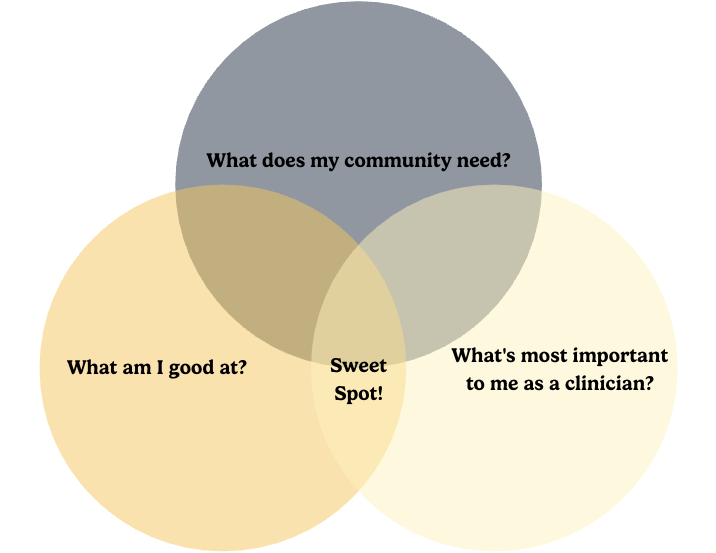
Start with this question: “What does your community actually need”? Maybe your area has tons of young families but hardly anyone doing early intervention. Or you're in a retirement community that could really use more dysphagia specialists. Understanding these gaps helps you position your expertise where it'll make the biggest impact.
However, your local needs are only half the equation. You've also got to actually enjoy the work! Building a practice around stuff that drains you is a fast track to burnout, even if there's huge demand. The sweet spot is where three things overlap: What does my community need, what am I good at and what’s most important to me as a clinician.
Where these three questions meet, that's where your positioning magic happens.
Lean Into Your Expertise
Here's one of the best pieces of advice for your brand: . Instead of trying to do everything for everyone, find the thing you're really, really good at, and make it your whole identity. Double down on it! Your unique expertise might come from specialized training, years of working with a specific group, or maybe an approach you've developed through tons of practice. Whatever it is, don't hide it!
Let's say you did extra training in accent modification and discovered you're actually amazing at helping professionals. Instead of listing accent modification as just another service on a long menu, what if your whole practice was built around this? You become THE accent modification specialist in your area. Companies and professionals looking for this specific help will seek you out often willing to pay premium rates because you've proven you're the expert.
Here’s another example: Maybe you've gotten really skilled at helping kids with selective mutism. You've done the training, read everything you can find, gone to conferences, worked with dozens of families facing this challenge. That expertise and experience is gold! It should be front and center in your brand, not buried somewhere in a list of services. When parents are desperately searching for help with selective mutism, they want a specialist, not someone who "also does" selective mutism along with ten other services.
The point is take that thing that makes you light up professionally, and that thing you're genuinely great at, then put it at the center of your practice. This doesn't mean you can't see other clients, but it does mean you lead with your strength in everything you do.
Understanding Your Service Delivery Model
How you deliver your services, whether it's in-person, virtual, or a mix of both, says a lot about your practice. It also totally changes who you're competing against! Let's break down what each approach means for your brand.
When you offer in-person services, your physical space becomes part of your brand. Your office communicates a lot: how professional you are, what you value, your whole vibe. Clients who choose in-person often love the hands-on feel, the dedicated therapy space, and that face-to-face connection. Your brand can lean into this. Maybe you highlight your thoughtfully designed rooms, your convenient location, or all the cool equipment you have. Of course with an office location, upfront costs for the space are an investment and you’re limited to clients who can travel to you.
Virtual services change the game completely. With virtual services, you're no longer just competing with the five clinics down the street. Now you're competing with 50+ clinicians offering virtual services across your entire state. Think about it, anyone can start a virtual practice at any time, so there's a LOT of competition out there. This is exactly why your brand becomes super important for virtual practices. You've got to show families what makes YOUR virtual therapy different. Maybe you're amazing at keeping kids engaged through the screen, or you offer way more flexible scheduling. The point is, don't just say "I do teletherapy”, show families why your approach to virtual care gets great results.
Hybrid models, where you offer both in-person and virtual, give families flexibility. You might position this as "care that fits your life", emphasizing that families can pick whatever format works best or even switch between them. The brand message here is all about being adaptable and putting families first.
Finally, in-home therapy has become an increasingly popular option among therapists, offering flexibility, the chance to see families in their natural environment and opportunities to work on skills in real-world contexts. Every choice you make as an in-home service provider communicates your brand. Everything from the bag you carry, the materials you select, your ability to adapt on the fly, all shapes how families perceive your practice. Do you request a quiet corner of the house or embrace the chaos of everyday life? Do you arrive with a structured activity or follow the child’s lead with household items? Your approach contributes to your brand positioning and begins the moment you walk through their doors.
Choosing Your Business Name
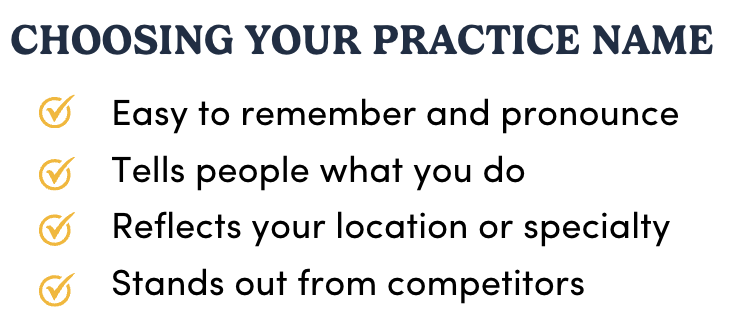
Your business name is often the very first thing people see, so it's worth putting some real thought into it! A great name sticks in people's heads, tells them something useful about what you do, and helps you stand out.
Here are some things to think about when choosing a business name:
Does it connect to your location? Names like "Riverbend Speech Therapy" or "Mountain View Communication Services" tie you to recognizable local landmarks. This helps families remember you and creates that hometown feeling.
Does it highlight what you're great at? Names like "Early Words Pediatric Speech" or "Voice Care Specialists" immediately tell people what you do and who you help. Super clear from the get-go!
Is it easy to remember and say? This is huge! You want families to be able to tell their friends about you without having to write it down. "Tiny Talkers Speech Therapy" is way easier than "Loquacious Language Intervention Specialists" (see what we mean?).
Does it give you room to grow? While being specific is great, think about the future too. If you call yourself "Toddler Talk Therapy" but later want to see school-age kids, your name might box you in.
Create a check-list and ask yourself is your business name:
Domain Name and Online Presence
Once you've nailed down your business name, next up is getting your online presence set up. Your domain name (that's your web address) works together with your business name to establish your practice's identity online.
The goal is to get a domain that closely matches your business name. If you're "Tiny Talker Speech Therapy," you want TinyTalkerSpeechTherapy.com. If the exact match isn't available, you can try slight variations, but don't stray too far from your actual name. Straying too far often confuses people who are trying to look up your business name directly. When picking your domain, try to snag a ‘.com’ if you can. It's what people automatically type when they're looking for you and is credible. If ‘.com’ isn't available, that might actually be a sign you need to rethink your business name. Think about it: most families will instinctively add ‘.com’ when searching for you, and if that takes them to someone else's site... well, that's not great for your brand!
A quick note: You'll need both a domain name (for your website) AND an LLC or business structure. They're different but they work together. This isn't an either/or situation, you need both to run your practice properly.
Putting It All Together: A Case Study
Let's look at a real example of how all these pieces come together.
Meet Sarah, a speech-language pathologist in Port Orchard, WA, who was struggling with the same challenges you might be facing. When Sarah first started her practice, she positioned herself as a general provider, helping anyone with any communication need. As her caseload grew, she decided to start focusing her brand to target her speciality area of voice and swallowing. This decision helped Sarah reposition herself as the go-to expert for geratric speech therapy services in her area. She adjusted her approach further to offer in-home and community-based therapy, partnering with local SNFs and hospitals in her area. Those local partnerships blossomed into long-term referral sources and helped Sarah fill her caseload!
Sarah’s story highlights how everything connects. Her audience choice lined up perfectly with her specialty, which shaped her service model, which justified her pricing. Each piece reinforced the others, creating a super clear brand that told her ideal clients exactly why she was perfect for them.
Taking Action on Your Brand Positioning
Now you've got all these pieces, here’s next steps to take action for yourself:
Start by getting honest with yourself about each piece of the process. Who do you really want to serve? Go beyond just "kids" or "adults," get specific about their needs, their situations, what they're looking for. What are you genuinely great at? Don’t be humble! What problems do you solve better than anyone else? How do you want to work with families? Write down your positioning in one clear statement using this format: "I help [specific population] with [specific problem] through [how you work] because [what makes you uniquely qualified]." This becomes your guiding statement for every decision you make about marketing and growing your practice.
It is important to remember, your first positioning choices don't have to be forever. So many successful practices tweak and evolve their positioning as they learn more about what they love, what they're great at, and what their community needs. (Take Sarah for example!) Start somewhere specific, don't try to be everything to everyone right off the bat. Then adjust as you go based on what's working and what feels right.
Brand building is ongoing work. You'll keep refining how you show up for potential clients. As you gain experience, build relationships, and really understand your market, your positioning will shift and get even clearer. Your first step is to make clear choices about who you serve, what you're great at, and how you deliver value. When you build your practice brand strategically, it becomes the foundation for everything else: your marketing messages, your pricing decisions, your referral relationships, and ultimately, your practice's success.
Find pediatric speech & occupational therapy, covered by insurance.