Autism allergies: 3 most common types
Updated: April 24, 2025 · 5 Minute Read

Reviewed by:
Alex Hurtado
Highlights
- Allergies can affect your child's behavior and cause symptoms like a stuffy or runny nose, itchy skin, hyperactivity, irritability, or tummy problems.
- Some common types of allergies include allergic rhinitis (caused by things like pollen or pet dander), food allergies (such as milk or gluten), and atopic dermatitis (which leads to red, itchy skin patches).
- Autistic kids may be more prone to allergies, including non-IgE mediated food allergies, which can cause inflammation and discomfort in their bodies.
- It's important to work with a medical team, which may include an allergist, to help identify and manage your child's allergies.
Autism allergies: 3 most common types
From pollen to peanuts, there are some familiar allergies among the general population. But research has shown that autistic kids may deal with some allergy issues more than non-autistic kids. It’s also true that non-IgE mediated food allergies are likely more common in children with autism.
Let’s explore each of these.
1. Eczema
Atopic dermatitis (also called eczema) is a chronic skin condition that causes patches of red, itchy, and dry skin. These patches can show up on their face, hands, feet, elbows, knees, or wherever their skin folds. At times, the affected skin may crust or ooze. It can be aggravated by certain skin products (like soap), allergens, or fabrics.
Eczema can begin in infancy or early childhood. We’re not exactly sure where atopic dermatitis comes from, but it may be a combo of genetic and environmental factors. For example, if you or your family have a history of things like asthma and hay fever, your child may be more prone to eczema.
There’s no cure for atopic dermatitis, but ointments, moisturizers, and creams can keep skin hydrated and reduce itchiness. It’s important to note that eczema itself is not technically an allergy, but it can sometimes be made worse by allergies.
2. Rhinitis
Commonly known as a stuffy or runny nose, rhinitis is something we’ve all dealt with at some point or another. Many autistic kids experience frequent rhinitis, either in response to allergic reactions or seasonal allergies. You probably already manage your child’s rhinitis using over-the-counter or prescription medications, like nasal sprays, antihistamines, or decongestants.
There are different types of rhinitis, including allergic rhinitis and non-allergic rhinitis. Allergic rhinitis is caused by allergens such as pollen, dust mites, pet dander, or certain foods. Non-allergic rhinitis isn’t caused by allergies but can be triggered by irritants like smoke, strong odors, changes in temperature, or certain medications.
Rhinitis can also be seasonal or perennial. Seasonal rhinitis (hay fever) occurs during specific times of the year when certain allergens are more prevalent. (Such as pollen in the spring or ragweed in the fall.) Perennial rhinitis can occur year-round and is usually triggered by allergens or irritants present in the environment at any time.
3. Food allergies
Autistic kids might be more likely to have non-IgE mediated food allergies. This means that unlike a usual allergy reaction, the IgE antibodies aren’t the boss. Other antibodies, proteins, and chemicals go to work fighting against the allergen. Those chemicals create inflammation. Most allergy tests use IgE levels to identify allergens, so these allergies can get easily missed by doctors.
Non-IgE mediated food allergies show up with gut-related discomfort or inflammation. For example, allergies like milk or gluten. These “secret” allergies can cause your child a lot of distress, including symptoms like upset stomach, diarrhea, or vomiting. But inflammation can also be more subtle. Your child’s discomfort may show up as increased irritability, aggression, or hyperactivity. Some doctors like to call the gut “the second brain” because important neurochemicals are created there. Gut health has an effect on the entire body.
Your child might love to eat the foods they’re allergic to, so you may not notice they even have a food allergy. It makes it very hard for your child to stay regulated and calm, which can lead to challenging behaviors, and the cycle repeats itself.
What are allergies?
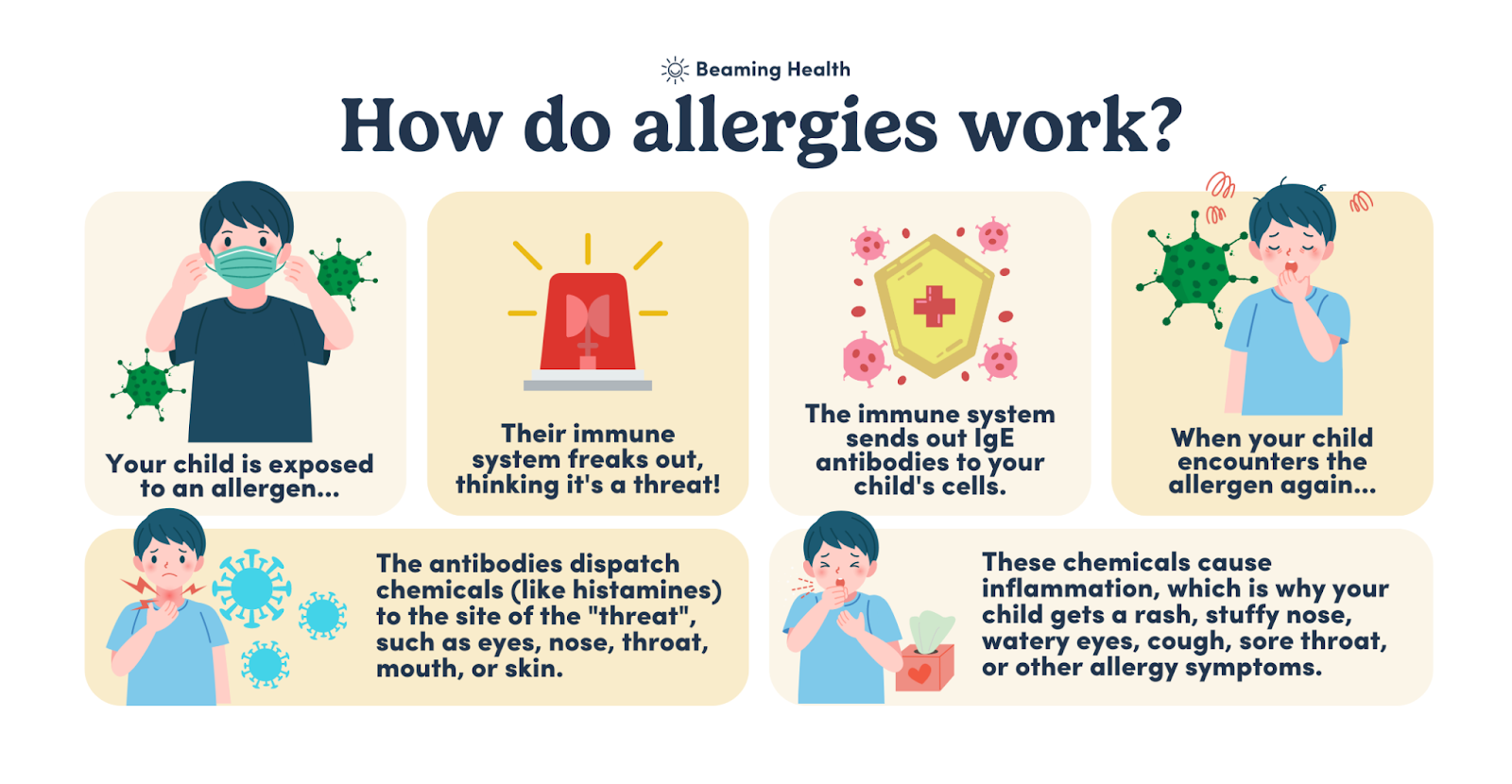
In a typical allergic reaction, your child’s body encounters an allergen (like pollen, dander, or pet hair) and sees it as a threat. Trying to protect itself, the immune system sends out a special protein called IgE antibodies to the mast cells in your child’s body. When your child comes in contact with the allergen again, those cells release chemicals (like histamines or eosinophils). The chemicals the antibodies release cause inflammation. That’s why your child’s nose gets stuffy and runny, or their skin breaks out in a rash when they come in contact with an allergen.
Types of allergies
There are several types of allergies that children can have. Your child may experience one or more of these. While there are some rare ones out there, these are the most common types:
- Allergic Rhinitis: This is when your child has allergies to things like pollen, dust, or pet dander in the air. It can make them sneeze a lot, have a runny or stuffy nose, and itchy or watery eyes.
- Food Allergies: Some children are allergic to certain foods like peanuts, milk, eggs, or fish. If they eat these foods, they might get hives, itching, or even have trouble breathing.
- Drug Allergies: Your child may be allergic to certain medicines. If they take a medicine they’re allergic to, they might get a rash, hives, or feel sick. For example, some people are allergic to penicillin or other types of antibiotics. Unfortunately, you might not know your child is allergic to a medication until they have a bad reaction to it.
- Insect Sting Allergies: If your child gets stung by a bee, wasp, or fire ant, they might have an allergic reaction. This can cause swelling, itching, or even trouble breathing.
- Contact Allergies: Some people have a reaction when their skin touches certain things, like certain metals, latex, or plants (such as poison ivy). It can make their skin red, itchy, give them a rash, or hives.
- Allergic Asthma: This is a specific subtype of asthma where asthma symptoms are triggered by things the person is allergic to, like pollen or pet dander. A person may have a combo of allergic and non-allergic asthma triggers. Not every person with asthma will have allergic asthma.
Keep in mind that allergic reactions can range from mild (like a runny nose) to severe (like an asthma attack or closed airway). Your child can have allergies you don’t notice because they don’t have a big reaction to them. Or, they may have allergies that are very serious and need immediate attention. It’s important to have your child’s allergies assessed by an expert, like an allergist or ear, nose, and throat doctor, to help you manage them.
Conclusion
Many children have allergies, but some research suggests children with autism might be more prone to them due to a weakened immune system. They may carry excess inflammation from these allergic reactions in their bodies (especially the gut) which can cause discomfort, pain, or other symptoms. It may be difficult for your child to communicate that they’re experiencing allergy symptoms. If your child seems irritated or hyperactive, or is having other challenging behaviors, it may actually be allergies! Allergies often go unnoticed in autistic kids, so work with an allergist and your child’s medical team to ensure they get a thorough check.
Find pediatric speech & occupational therapy, covered by insurance.


Dive Deeper
Article References
- Fowler P. What Are Histamines? WebMD. Published June 6, 2016. https://www.webmd.com/allergies/what-are-histamines
- 1.Miyazaki C, Koyama M, Ota E, et al. Allergies in Children with Autism Spectrum Disorder: a Systematic Review and Meta-analysis. Review Journal of Autism and Developmental Disorders. 2015;2(4):374-401. doi:https://doi.org/10.1007/s40489-015-0059-4
- Jyonouchi H. Autism spectrum disorders and allergy: observation from a pediatric allergy/immunology clinic. Expert Review of Clinical Immunology. 2010;6(3):397-411. doi:https://doi.org/10.1586/eci.10.18
- Jyonouchi H. Food allergy and autism spectrum disorders: Is there a link? Current Allergy and Asthma Reports. 2009;9(3):194-201. doi:https://doi.org/10.1007/s11882-009-0029-y
- Zerbo O, Leong A, Barcellos L, Bernal P, Fireman B, Croen LA. Immune mediated conditions in autism spectrum disorders. Brain, Behavior, and Immunity. 2015;46:232-236. doi:https://doi.org/10.1016/j.bbi.2015.02.001
- levo. What Does it Mean to “Outgrow” an Allergy?. Northeast Allergy, Asthma, and Immunology. Published July 16, 2021. https://neaai.com/what-does-it-mean-to-outgrow-an-allergy/